
How scholarship money is paid
Where scholarship money usually goes, when it tends to arrive, and what to do with a check that names both you and your college.
Read moreActivities and achievements
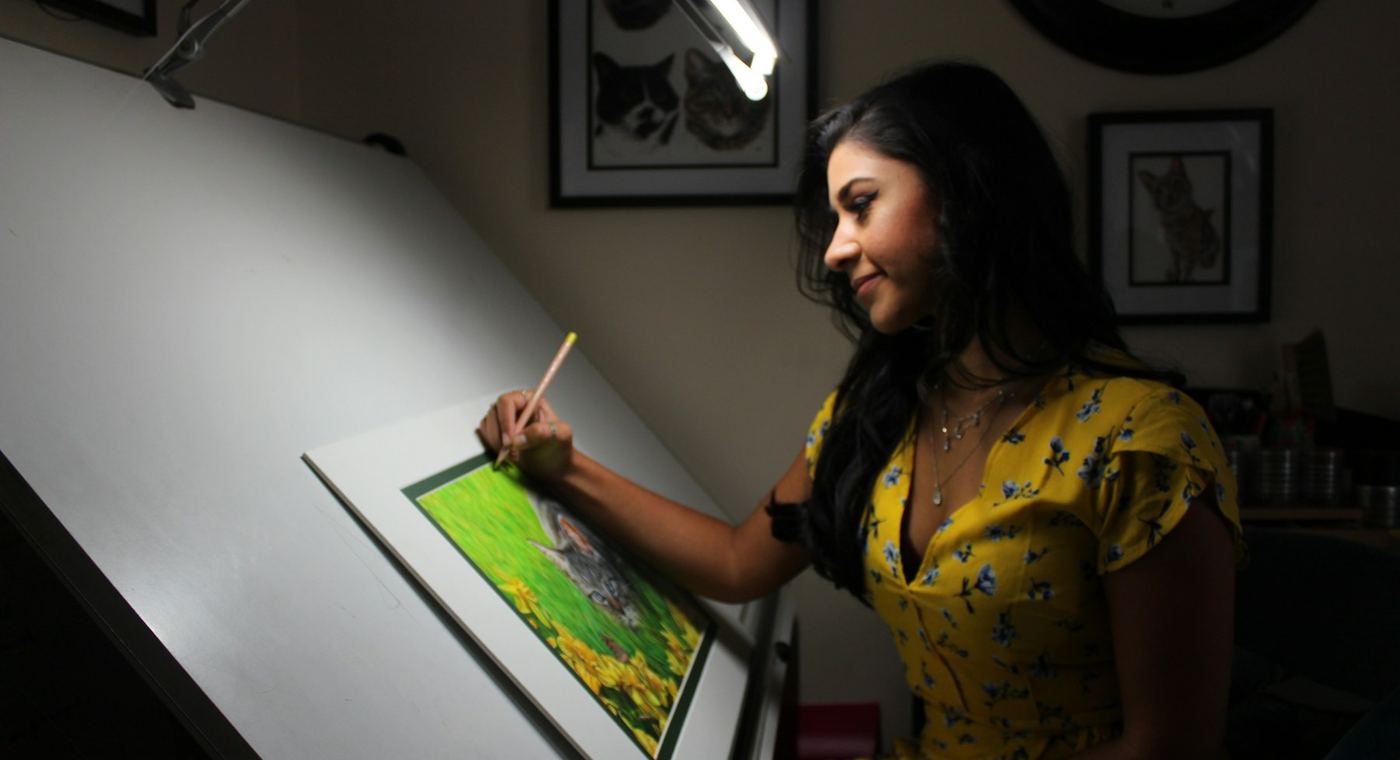
Use this to put together a portfolio or work sample when a scholarship asks to see what you make. It covers choosing pieces, preparing files, labeling each one and showing that the work is your own.
Awards in visual art, music, theater, creative writing, design and film often ask for samples instead of, or alongside, an essay. A music award may want a recording or a live audition, while a writing award may want a short story or a set of poems. Engineering and computer science awards sometimes ask for photos or a written account of a project you built.
The sponsor's rules set the number of pieces, file types, size limits and sometimes a theme. Read them closely, because a portfolio that ignores the rules may be set aside before anyone looks at the work.
Read them closely, because a portfolio that ignores the rules may be set aside before anyone looks at the work.
Pick pieces that show your range and your strongest recent work, rather than everything you have made. Committees often look for growth, skill and a personal voice, so a small set of finished pieces usually reads better than a large mixed one. If the award has a theme, choose work that speaks to it.
Ask a teacher in the field to look over your choices. An art, music or writing teacher has often seen what reviewers in that field expect and can tell you which piece is weakest.
Photograph artwork in even daylight against a plain background, and crop out anything that is not the piece. Record music in a quiet room and listen back before you upload. Name each file with your name and the title of the piece, and convert it to a format the portal accepts.
Many portals ask for a title, the year, the medium or instrument and the size or length of each piece. Some also ask for a short artist statement explaining what you were trying to do, which reads well in plain language within any word limit.
Sponsors expect every sample to be your own work, and many ask you to confirm that when you submit. For group projects, explain your part clearly and credit the others. Read the sponsor's rules on outside help, teacher edits and AI tools before you prepare anything.
Keep original files and drafts in case the sponsor asks about a piece. Sketches and earlier versions show how the work developed and can answer any question about who made it.
Who to ask
A teacher in your field and the sponsor's contact person
Follow the sponsor's file rules exactly, choose a small set of strong recent work and label each piece clearly.
Where scholarship money usually goes, when it tends to arrive, and what to do with a check that names both you and your college.
Read moreWhat the FAFSA Submission Summary shows a sponsor, why the Student Aid Index matters, and when to file each year.
Read moreHear about new articles on the piece of the application you choose, by email, and by text if you tick the box.
